
Baixa
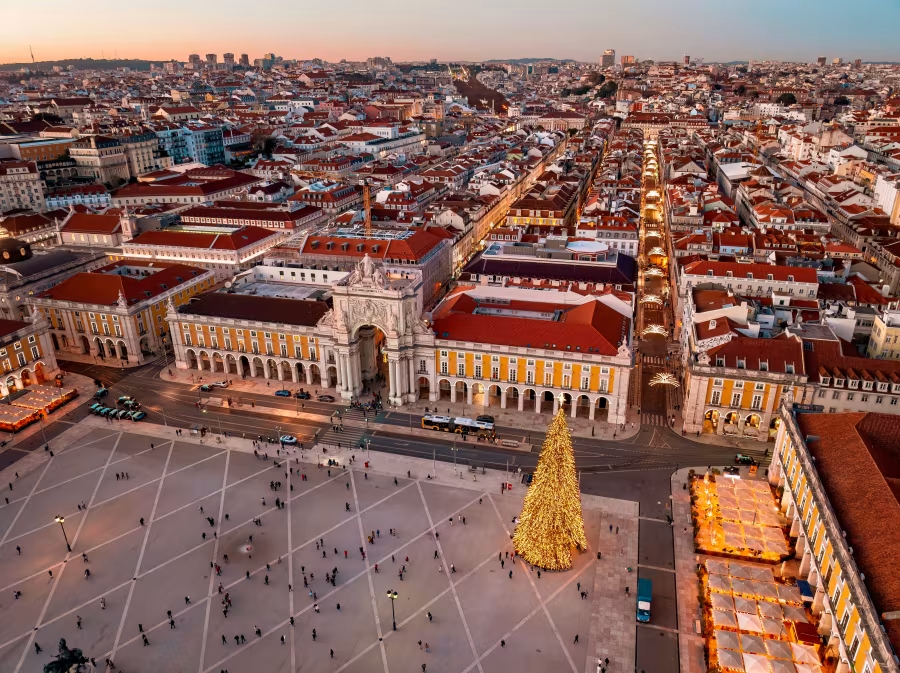
Baixa is the heart of Lisbon: a flat, elegant grid of arcaded streets, grand squares and riverside terraces, rebuilt after the 1755 earthquake and still the natural starting point for any short stay in the city.
Why visit Baixa during a short stay in Lisbon
For guests staying in a short rental, Baixa is the easiest neighbourhood to fit into any day. It is flat, walkable and perfectly connected, so it works as a first orientation walk, a shopping afternoon, a dinner stop or the link between Chiado, Alfama and the riverfront.
From our closest Lisbon property, Trendy Apartment in Bairro Alto, Baixa is a short downhill walk through Chiado, or one stop by metro, tram or the Elevador da Glória and Santa Justa lifts for guests who prefer to avoid the slopes.
A short history of Baixa
Baixa Pombalina is the district rebuilt after the earthquake, fire and tsunami of 1 November 1755, which destroyed most of downtown Lisbon. Under the direction of the Marquis of Pombal, engineers laid out one of the first planned grids in modern Europe, with standardised façades, wide straight streets and an early anti-seismic timber structure known as the gaiola pombalina.
The result is a neighbourhood that feels very different from the medieval lanes of Alfama: symmetrical, rational and open to the river. Many streets still carry the names of the trades once concentrated in them, such as Rua dos Sapateiros, Rua da Prata and Rua do Ouro, and the ground floors remain full of shops, cafés and workshops.
What Baixa offers
- Grand squares: Praça do Comércio opening onto the Tagus, plus Rossio and Praça da Figueira with their cafés and terraces.
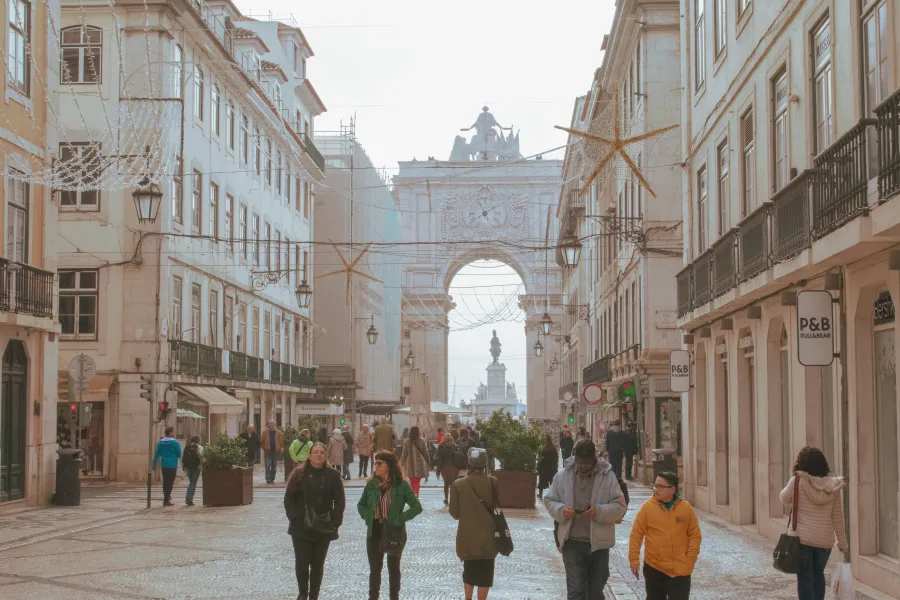
- Shopping streets: Rua Augusta and the parallel pedestrian streets, from historic shops to international brands.
- Viewpoints and lifts: the Santa Justa Lift and the Rua Augusta Arch terrace, both with rooftop views over the grid.
- Food and cafés: century-old pastry shops, tascas, seafood restaurants and riverside esplanades.
- Transport hub: Rossio, Baixa-Chiado, Terreiro do Paço and Cais do Sodré connect to the airport, Sintra, Cascais and the south bank ferries.
The people of the neighbourhood
Baixa is Lisbon at work: shop assistants, waiters, office staff, street musicians, shoe shiners, market traders and commuters crossing the squares every morning. Fewer residents live here than in Alfama, but the district has a strong daily rhythm that is easy to notice if you slow down.
Visitors are part of that rhythm too. Keep pavements clear on the busiest streets, be attentive to your belongings in crowded areas such as Rossio and tram stops, buy from the historic shops that keep the district alive, and remember that the terraces fill up quickly at lunchtime.
Main points of interest
- Praça do Comércio: the monumental riverside square, with arcades, the equestrian statue of King José I and open views of the Tagus.
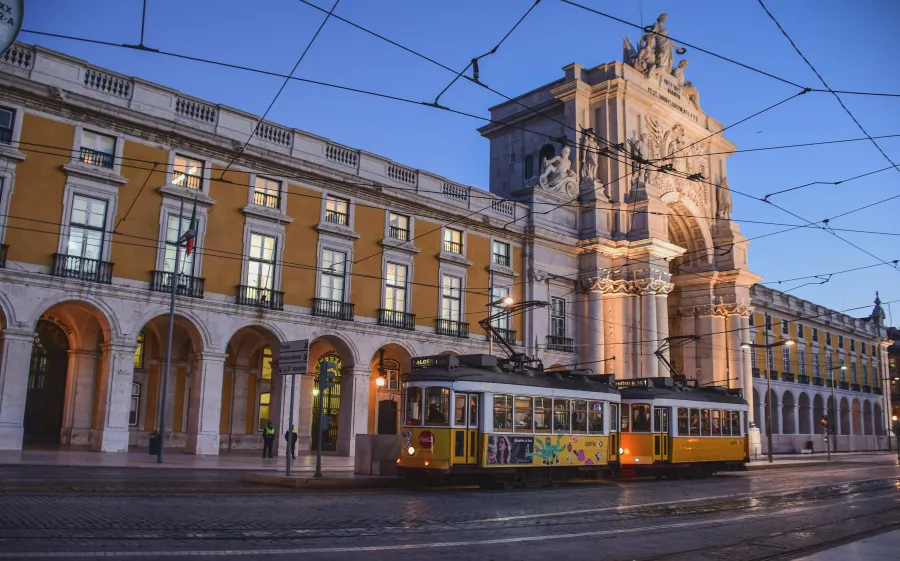
- Arco da Rua Augusta: the triumphal arch closing the square, with a viewing terrace over Baixa and the castle hill.
- Rua Augusta: the main pedestrian axis linking the river to Rossio.
- Elevador de Santa Justa: the iron lift connecting Baixa to Carmo and Chiado, with a panoramic platform.
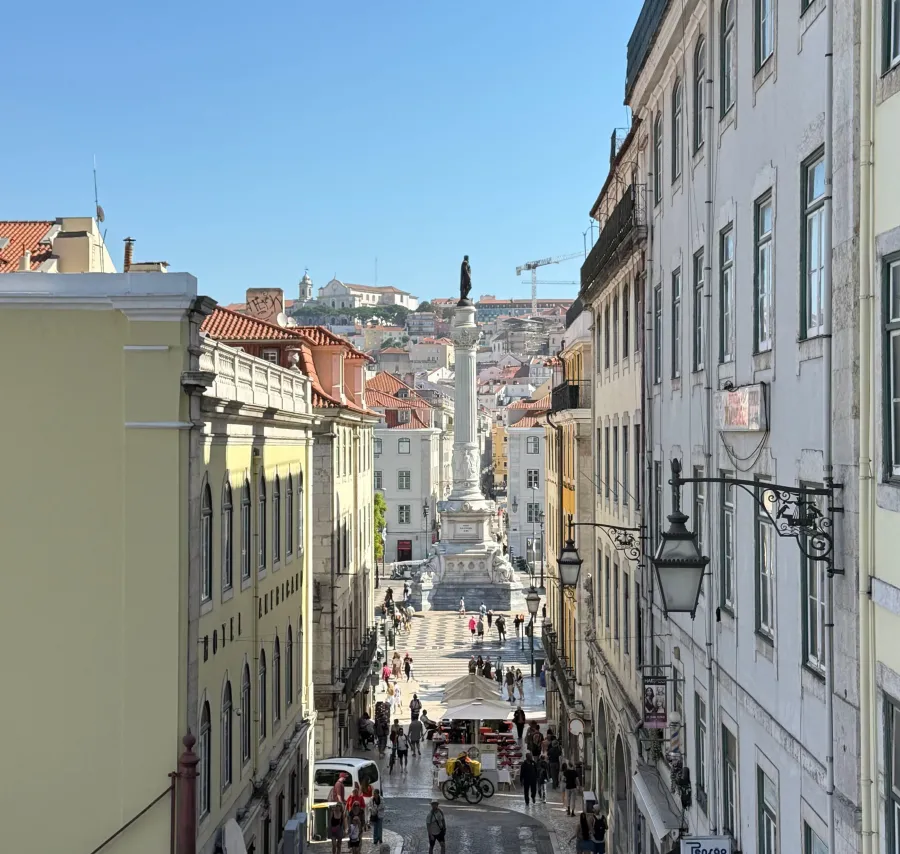
- Rossio (Praça D. Pedro IV): the classic meeting square, with wave-patterned paving, fountains and the National Theatre D. Maria II.
- Praça da Figueira: a lively square with tram stops, cafés and a direct view towards Castelo de São Jorge.
- Igreja de São Domingos and Rua das Portas de Santo Antão: a historic church and the traditional restaurant street just behind Rossio.
- Lisboa Story Centre and Núcleo Arqueológico: useful stops for understanding the earthquake and the Roman layers under the district.
Suggested plan from Bairro Alto
- Walk down from Bairro Alto through Chiado and take the Santa Justa Lift viewpoint for a first overview.
- Continue along Rua Augusta towards the river, stopping for coffee or a pastel de nata on the way.
- Climb the Rua Augusta Arch and then cross Praça do Comércio to the riverside steps.
- Return inland to Rossio and Praça da Figueira, adding Rua das Portas de Santo Antão if you want dinner nearby.
- End the day with sunset by the Tagus, or continue uphill to Alfama and the castle.
Good to know before you go
- Baixa is flat and stroller-friendly, but the calçada paving is slippery when wet, so choose shoes with grip.
- Mornings are calmer; midday and late afternoon are the busiest hours on Rua Augusta.
- Queues for the Santa Justa Lift are long: the free walkway from Largo do Carmo reaches the same upper level.
- Restaurants with menus in many languages and staff calling from the door are usually the most touristy options; the side streets are better value.
- Keep bags closed and watch your pockets on crowded trams and around Rossio station.
- Use Baixa as your transport base: trains to Sintra leave from Rossio and trains to Cascais from Cais do Sodré, both a few minutes away.