
Belém
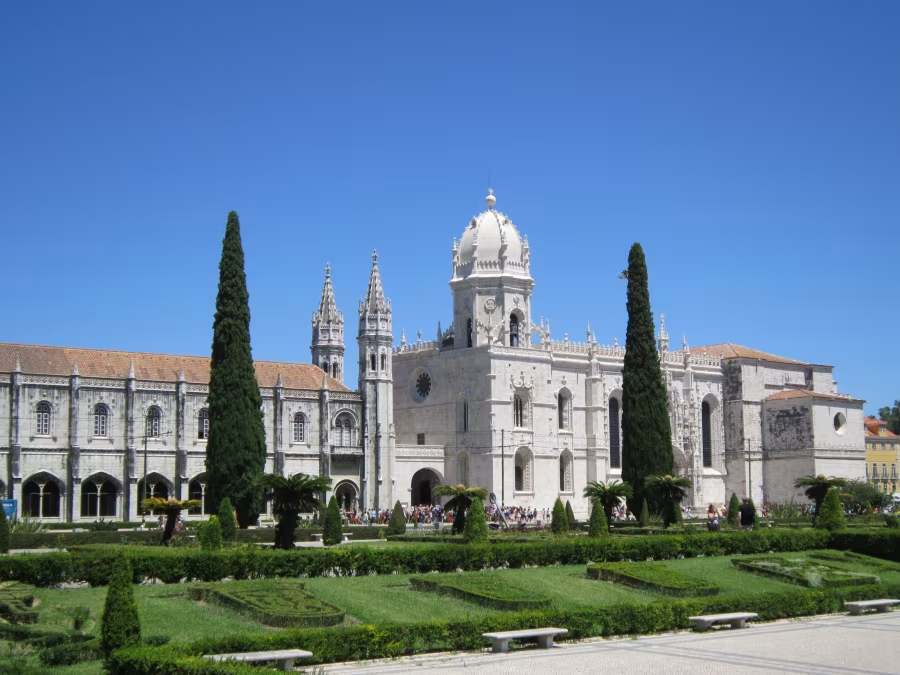
Belém is Lisbon at its most monumental: a riverside district of world-famous monuments, wide gardens, museums and pastry shops, spread along the Tagus where the Portuguese ships once left for the Age of Discoveries.
Why visit Belém during a short stay in Lisbon
For guests staying in a short rental, Belém is the classic half-day plan. Everything of interest sits within a flat, walkable riverside strip, which makes it the easiest Lisbon district to visit with children, with limited mobility or on a day when the hills of the old town feel like too much.
From our closest Lisbon property, Trendy Apartment in Bairro Alto, Belém is roughly 15 minutes by taxi, or a scenic ride on tram 15E and the Cascais train line from Cais do Sodré for guests who prefer public transport.
A short history of Belém
Belém (the Portuguese name for Bethlehem) grew around the point where the Tagus meets the Atlantic. It was from this stretch of river that Vasco da Gama sailed to India in 1497, and the wealth brought back from those voyages paid for the Manueline monuments that still define the district.
Largely spared by the 1755 earthquake, Belém kept its monastery, its tower and its open riverfront while central Lisbon was rebuilt from the ground up. In the twentieth century the area gained gardens, museums and cultural centres, and today it combines heritage sightseeing with a relaxed neighbourhood of residents, students and river walkers.
What Belém offers
- Monuments: UNESCO World Heritage architecture from Portugal's maritime golden age, within walking distance of each other.
- Museums: art, archaeology, coaches, design and contemporary exhibitions, enough for several visits.
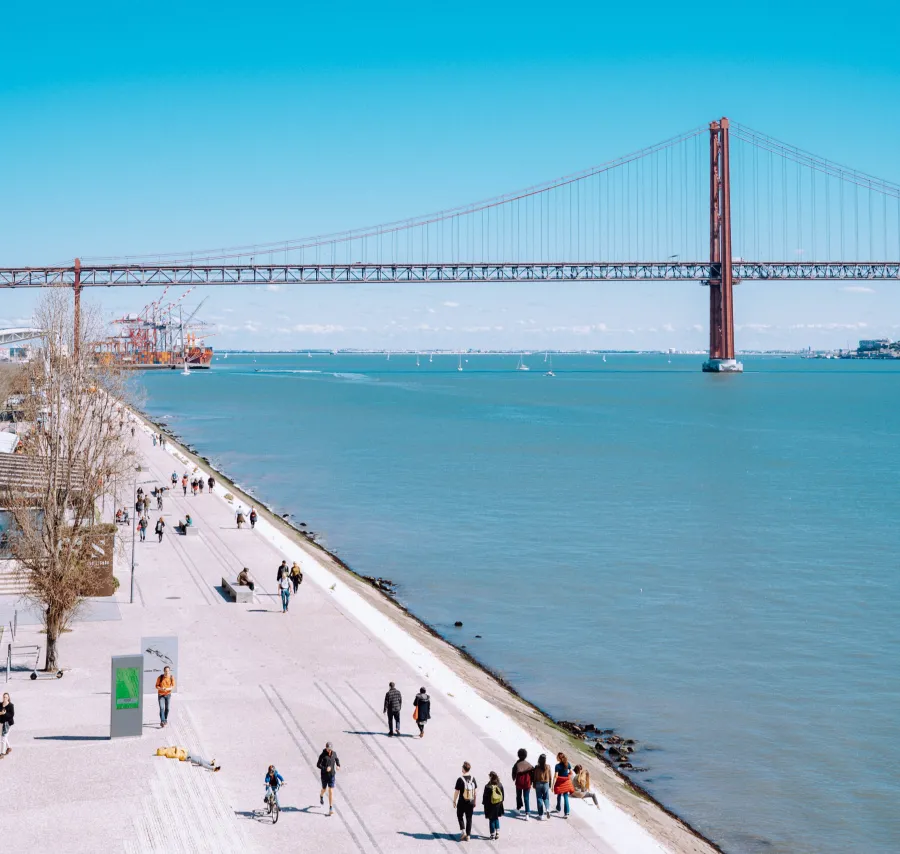
- Riverside walks: a long, flat promenade along the Tagus with open views towards the 25 de Abril bridge.
- Gardens: large green spaces, fountains and shaded benches between the monuments.
The people of the neighbourhood
Beyond the monuments, Belém is a working residential parish: families, university students from the nearby campuses, museum and café staff, rowers and runners who use the riverfront every morning. Away from the main avenue, the side streets are quiet, with small grocers, bakeries and neighbourhood restaurants where lunch costs a fraction of the tourist strip.
Visitors are part of daily life here, so the usual courtesies apply: queue patiently at the pastry shop, keep the cycle lane on the promenade clear, and remember that the gardens are shared with residents rather than reserved for photographs.
Main points of interest
- Torre de Belém: the sixteenth-century fortified tower on the river, a UNESCO World Heritage site and the symbol of the district.
- Mosteiro dos Jerónimos: the great Manueline monastery, with its church, cloister and the tombs of Vasco da Gama and Luís de Camões.
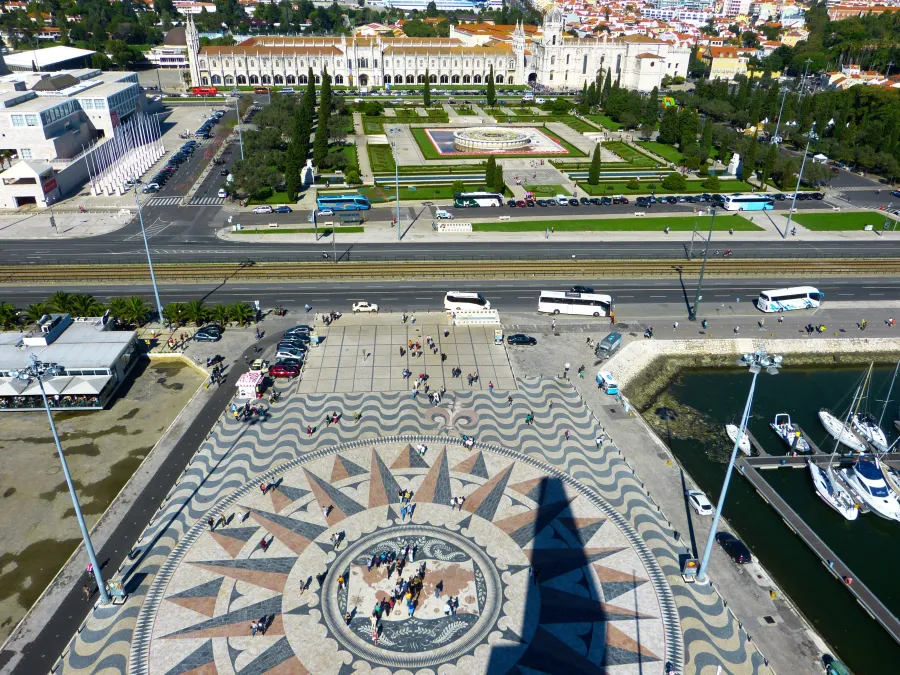
- Padrão dos Descobrimentos: the Discoveries monument, with a lift to a terrace overlooking the compass rose and the river.
- Pastéis de Belém: the historic bakery serving the original custard tarts since 1837.
- MAAT: the Museum of Art, Architecture and Technology, with a walkable roof above the waterfront.
- Centro Cultural de Belém and Museu Coleção Berardo: modern and contemporary art beside the monastery.
- Museu Nacional dos Coches: one of the world's finest collections of royal carriages.
- Jardim Botânico Tropical and Praça do Império: shaded gardens and formal fountains between the main sights.

Suggested plan from Bairro Alto
- Leave early and arrive in Belém before the coach groups, ideally soon after opening time.
- Start with the Mosteiro dos Jerónimos, buying tickets online in advance.
- Cross to Pastéis de Belém for a warm tart and coffee, taking the counter queue rather than the terrace if you are short of time.
- Walk the riverside to the Padrão dos Descobrimentos and continue to Torre de Belém.
- Finish at MAAT or the Berardo collection, then return to the centre by tram, train or taxi in time for dinner.
Good to know before you go
- Most museums and monuments close on Mondays; check opening hours before travelling.
- Book Jerónimos and Torre de Belém tickets online to avoid the longest queues, especially between April and October.
- The district is flat and pushchair friendly, but the distance from one end to the other is around two kilometres.
- Shade is limited along the river at midday; bring water, a hat and sun protection in summer.
- Take the counter queue at Pastéis de Belém for takeaway, which usually moves much faster than the table service.
- Late afternoon light on the tower and the bridge is the best of the day for photographs.
Frequently asked questions
How do I get from central Lisbon to Belém?
Tram 15E from Praça da Figueira or Cais do Sodré takes about 25 minutes, the Cascais train line stops at Belém in around 10 minutes from Cais do Sodré, and a taxi from the city centre takes roughly 15 minutes.
How long should I spend in Belém?
Half a day covers the monastery, the pastry shop, the Discoveries monument and the tower. A full day is better if you also want two or three museums.
Is Belém worth visiting with children?
Yes. It is flat, open and easy to walk, with gardens, boats on the river, the coach museum and space to run between the monuments.