
Parque das Nações
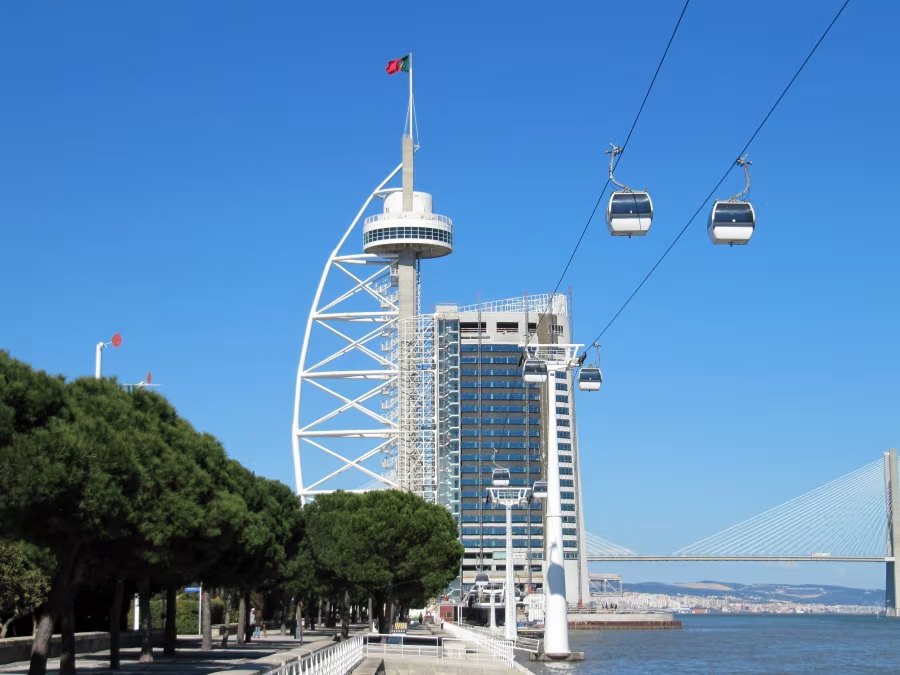
Parque das Nações is modern Lisbon: a riverside district of glass, water and open space built for Expo 98, where the Oceanário, a cable car over the Tagus and wide traffic-free promenades sit ten minutes from the airport and twenty from the old town.
Why visit Parque das Nações during a short stay in Lisbon
For guests staying in a short rental, Parque das Nações is the easiest contrast to the historic centre. It is flat, shaded, pushchair and wheelchair friendly, and everything of interest lines a single two-kilometre riverside walk, which makes it an ideal half day with children, on a rainy afternoon or on the last day before an early flight.
From our closest Lisbon property, Trendy Apartment in Bairro Alto, the district is about 20 minutes on the metro red line to Oriente, or roughly 15 minutes by taxi. Lisbon airport is only two metro stops away.
A short history of Parque das Nações
Until the 1990s this eastern riverfront was an industrial zone of oil depots, a slaughterhouse and container yards, largely cut off from the city. It was chosen as the site of Expo 98, the world exposition marking five hundred years since Vasco da Gama reached India, and the whole area was rebuilt from scratch around an ocean and water theme.
After the exposition closed, the pavilions were converted into an aquarium, a science museum, a concert arena and a casino, and the surrounding blocks became housing and offices. In 2012 Parque das Nações became a parish of Lisbon in its own right, and today it is one of the city's most sought-after residential districts as well as a visitor destination.
What Parque das Nações offers
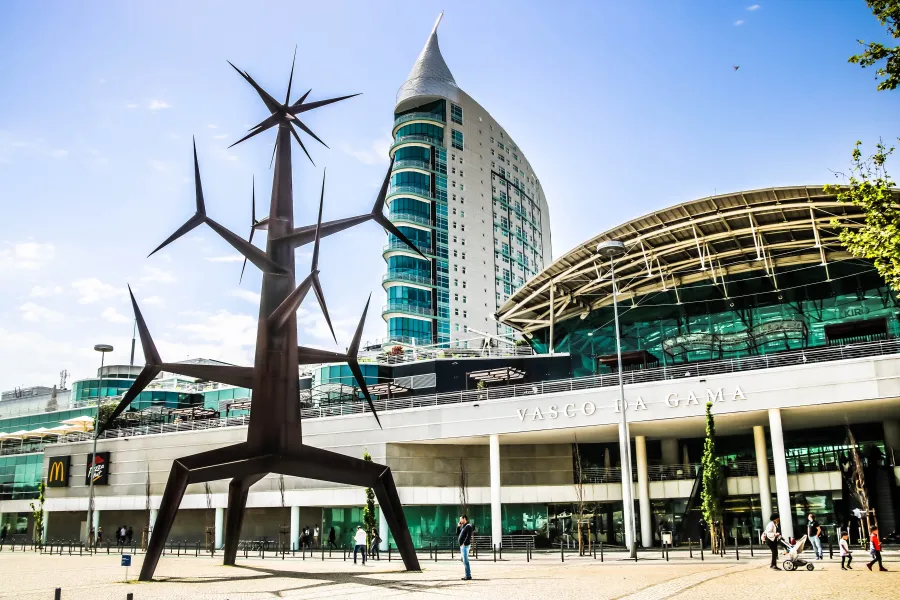
- Contemporary architecture: Calatrava's Oriente station, the Portugal Pavilion canopy and the Vasco da Gama tower along the water.
- Family attractions: one of Europe's largest aquariums, a hands-on science museum and open lawns for children.
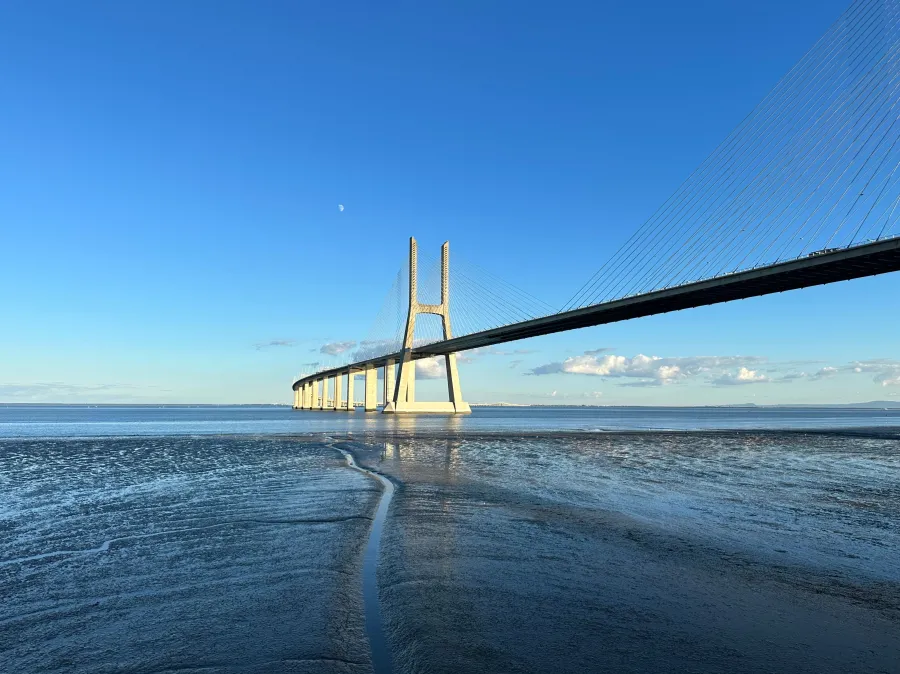
- River views: a five-kilometre promenade, a cable car above the Tagus and the longest bridge in Europe on the horizon.
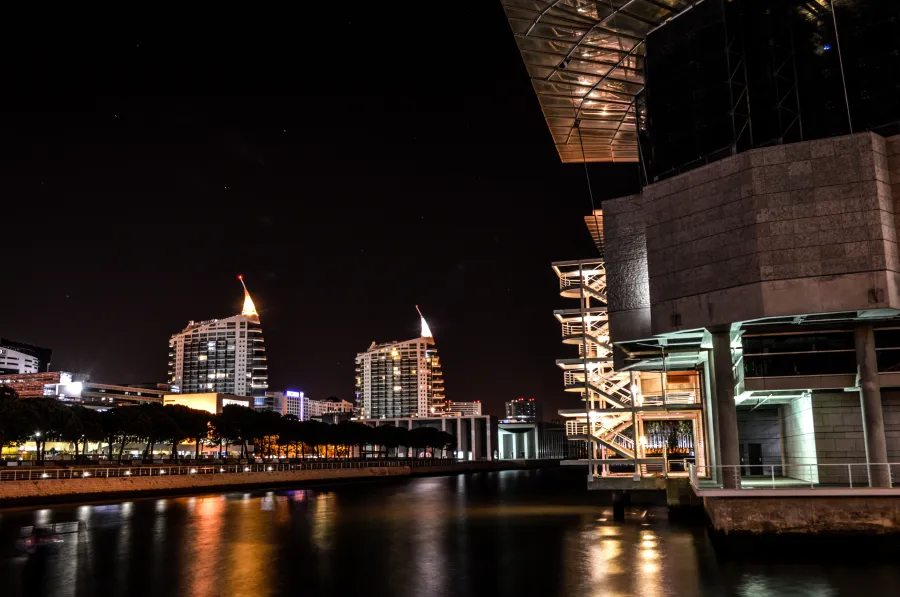
- Gardens and water: themed gardens, fountains, volcanic water features and shaded benches between the buildings.
- Eating, shopping and events: riverside terraces, a large shopping centre, a casino and Portugal's biggest indoor arena.
The people of the neighbourhood
Unlike the historic districts, Parque das Nações was designed as a place to live. Its residents are largely young families and professionals working in the office towers and nearby business parks, joined at weekends by Lisboetas who come to run, cycle, skate or eat by the river. Schools, supermarkets and a marina keep the area busy outside visiting hours.
The courtesies here are practical rather than historic: keep to the pedestrian side of the shared promenade, leave the cycle lane clear, and remember that the quiet residential streets behind the waterfront are homes, not part of the attraction.
Main points of interest
- Oceanário de Lisboa: one of the largest aquariums in Europe, built around a single vast ocean tank, and the most visited attraction in Portugal.
- Telecabine Lisboa: the cable car running about a kilometre along the river between the Oceanário and the Vasco da Gama tower.
- Gare do Oriente: Santiago Calatrava's station, a cathedral-like canopy of steel and glass serving metro, trains and buses.
- Pavilhão do Conhecimento: an interactive science and technology museum designed for children and teenagers.
- Altice Arena: Portugal's largest indoor venue, host to concerts, sports and major international events.
- Ponte Vasco da Gama: the 17-kilometre bridge across the Tagus, best seen from the northern end of the promenade at sunset.
- Jardim Garcia de Orta and the themed gardens: plants brought from the former Portuguese territories, alongside the water gardens and volcanic fountain.
- Casino Lisboa and Centro Vasco da Gama: evening entertainment and a large shopping centre beside Oriente station.
Suggested plan from Bairro Alto
- Take the metro red line to Oriente and walk through Gare do Oriente to the riverfront.
- Start at the Oceanário with a timed ticket booked online, ideally at opening time.
- Add the Pavilhão do Conhecimento next door if you are travelling with children.
- Ride the cable car north along the river towards the Vasco da Gama tower.
- Walk back along the promenade through the gardens, stopping for lunch on a riverside terrace.
- Finish with the shopping centre, the casino or a concert at the arena before the metro back to the centre.
Good to know before you go
- Book Oceanário tickets online with a time slot; queues are longest at weekends and during school holidays.
- The district is flat and fully accessible, with lifts, ramps and smooth paving throughout.
- Distances are deceptive: it is about two kilometres from the Oceanário to the Vasco da Gama bridge viewpoint.
- There is very little shade on the promenade at midday in summer, and the river wind can be strong in the afternoon.
- The cable car is a one-way ride, so plan to walk back or buy a return ticket.
- Check the Altice Arena schedule before you travel: on concert nights the metro and restaurants are extremely busy.
- With only two metro stops to the airport, this is a practical area for the last morning of a stay.
Frequently asked questions
How do I get from central Lisbon to Parque das Nações?
Take the metro red line to Oriente, about 20 minutes from the city centre with one change. A taxi takes roughly 15 minutes, and the airport is only two metro stops away.
How long should I spend in Parque das Nações?
Half a day is enough for the Oceanário, the cable car and the riverside walk. Allow a full day if you also visit the science museum and stay for dinner by the river.
Is Parque das Nações worth visiting with children?
Yes. It is the most child-friendly district in Lisbon: flat, traffic-free by the river, with the aquarium, the science museum, the cable car, playgrounds and open lawns.
Is Parque das Nações worth visiting if I only have a few days?
If it is your first visit and time is short, prioritise the historic centre and Belém. Add Parque das Nações for the Oceanário, on a rainy day, or on the last morning before a flight.